
The Tiger House
Millerton, NY
2025
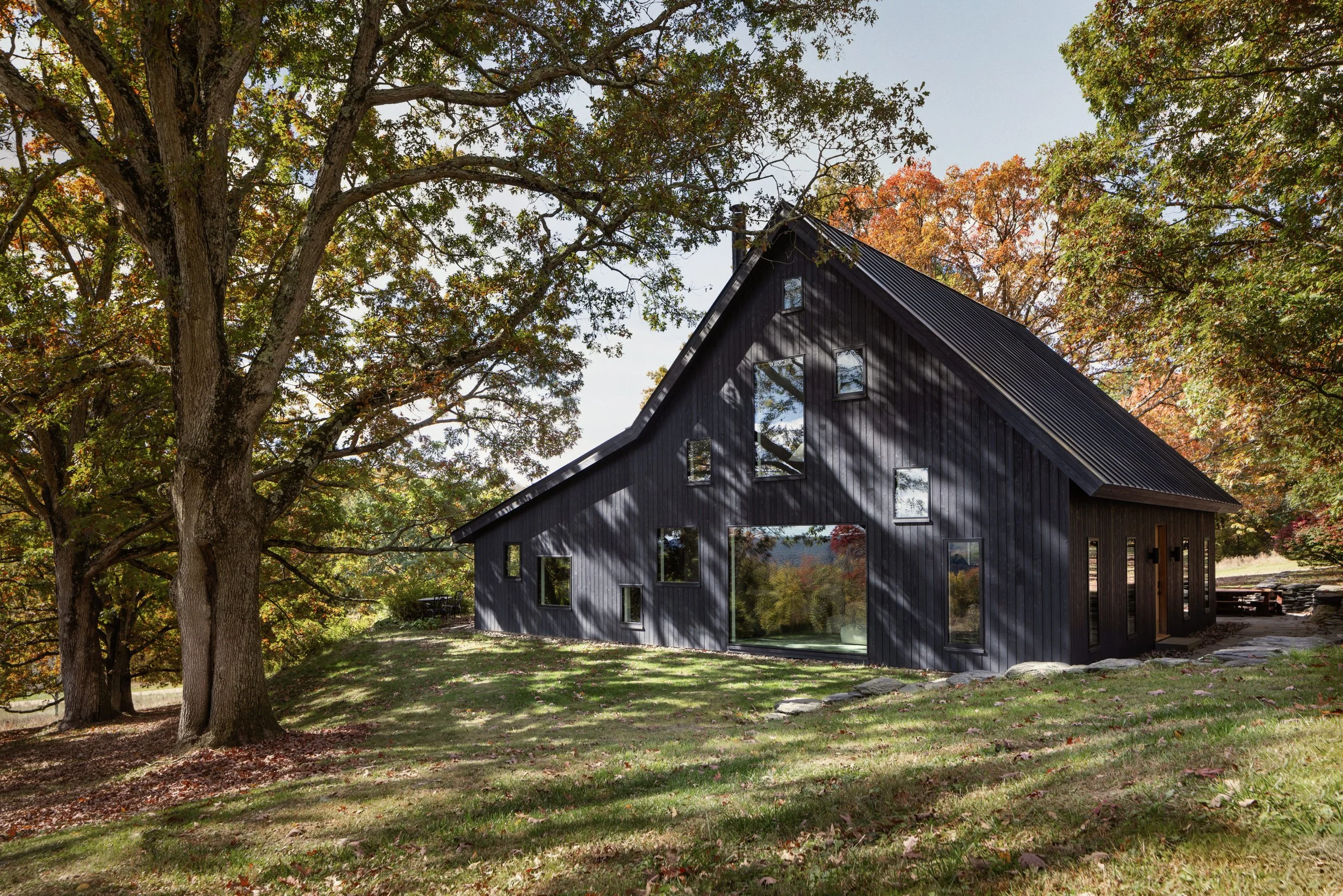
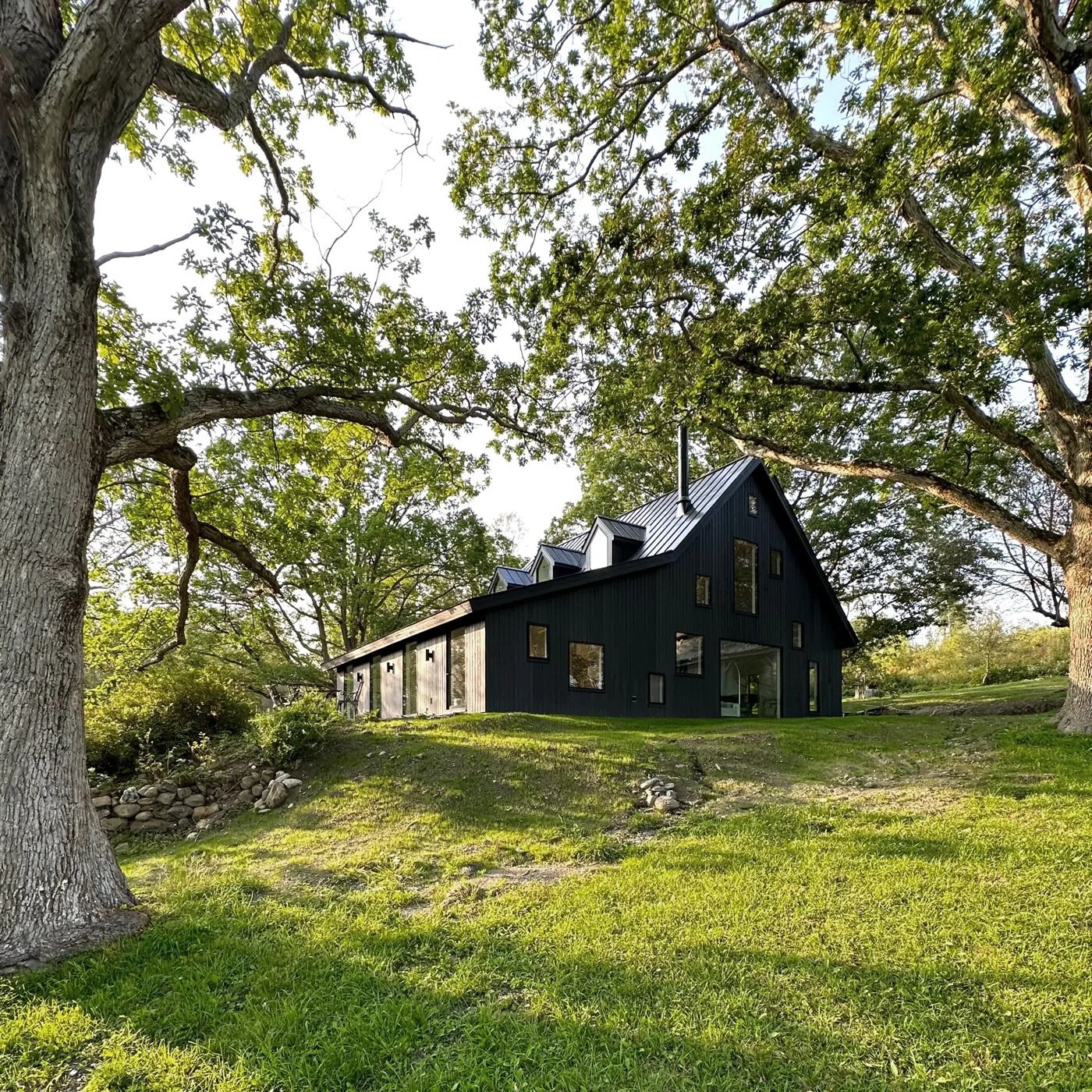
Tiger House is the adaptive reuse of a disused carriage house in New York’s Hudson Valley, reimagined as a primary residence for a young couple seeking a deep connection to landscape, light, and craft. The project preserves the existing timber frame and footprint while introducing an entirely new spatial and material logic, one that draws equally from North American rural vernacular and Japanese design sensibilities.
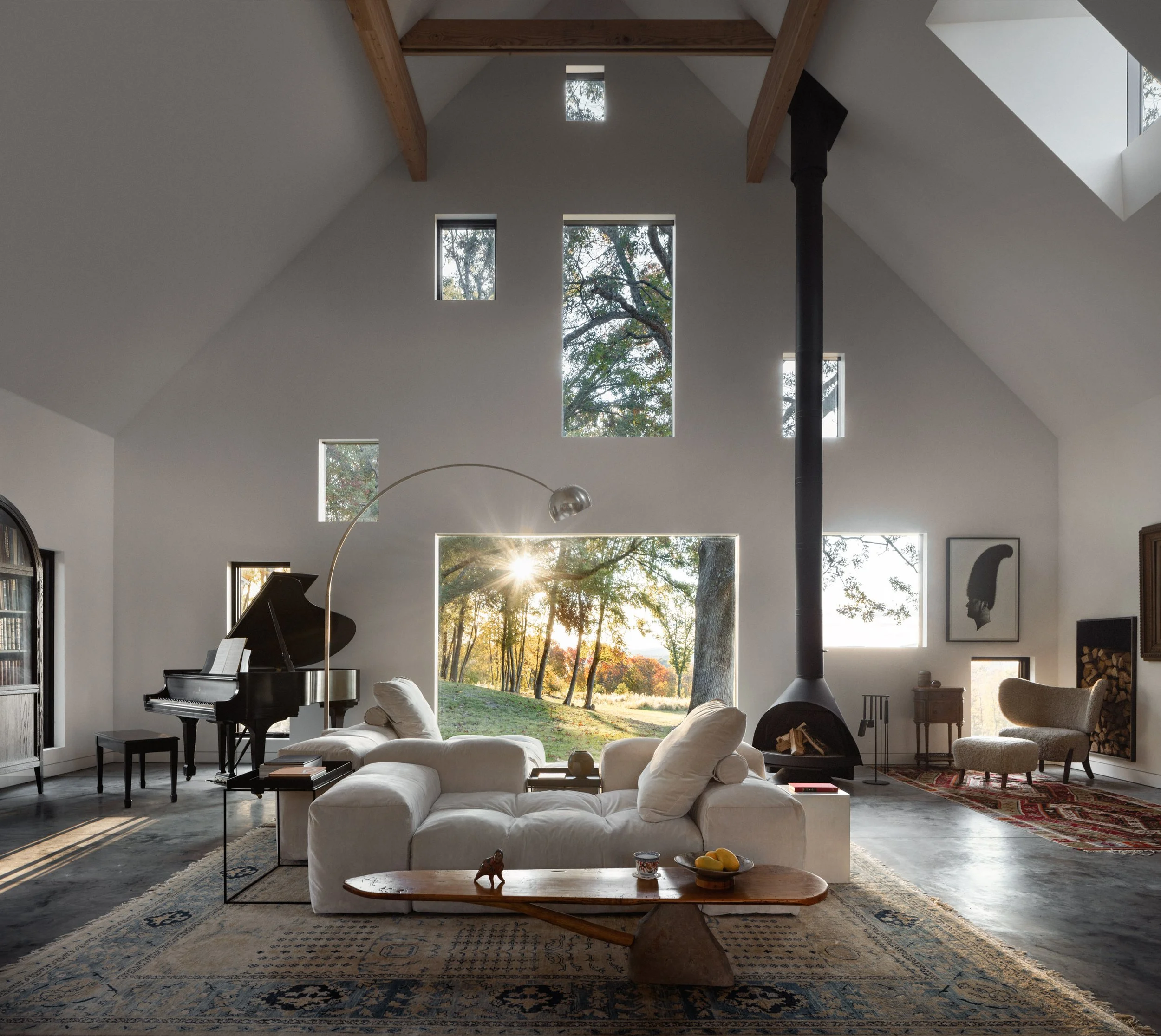
The design reorients the structure’s internal life toward its surrounding environment. The original barn doors were removed and replaced with large glazed openings that align with valley views, while other windows were added with deliberate precision to create framed compositions of the natural landscape. These "landscape portraits" function both as orientation devices and contemplative visual anchors.
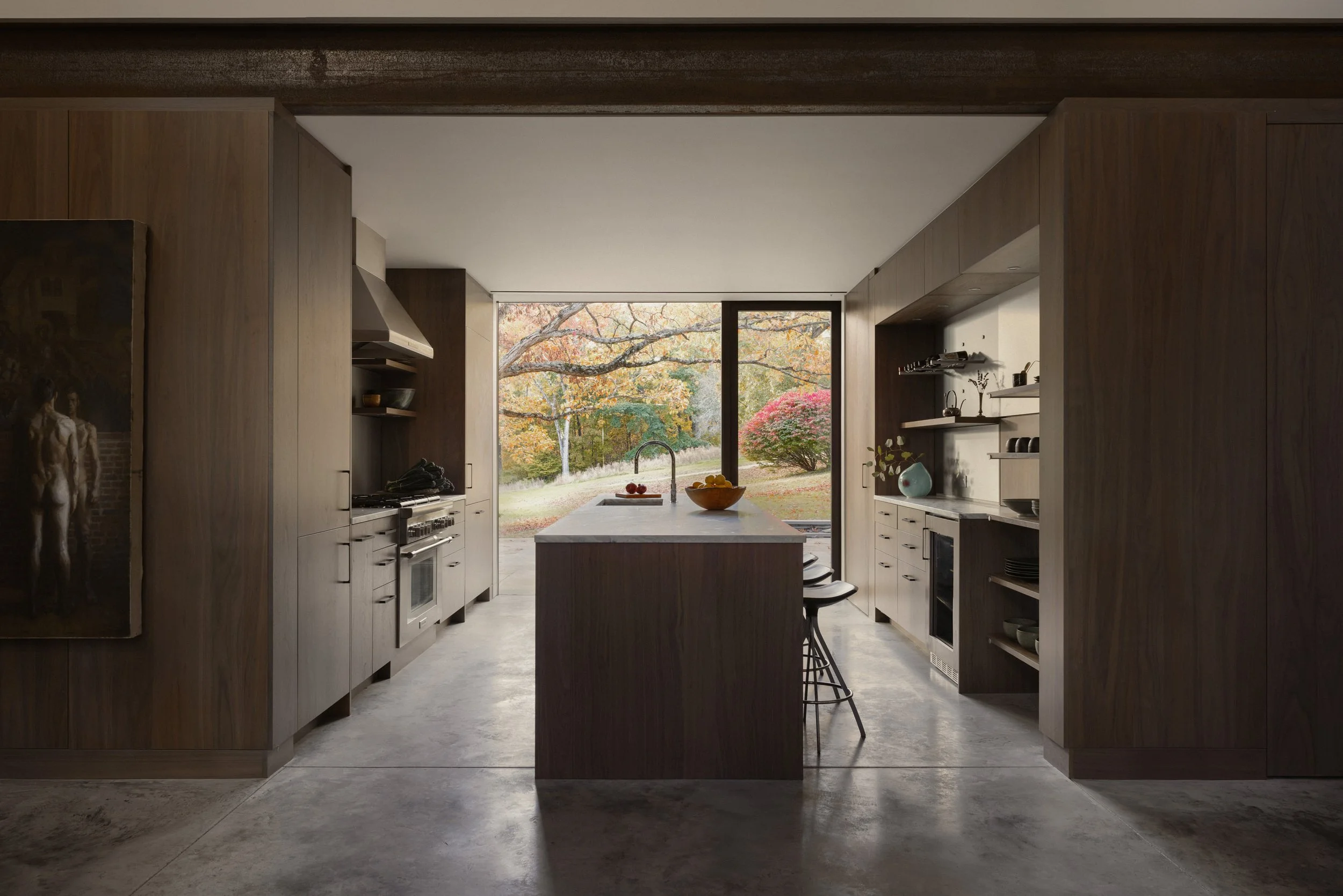
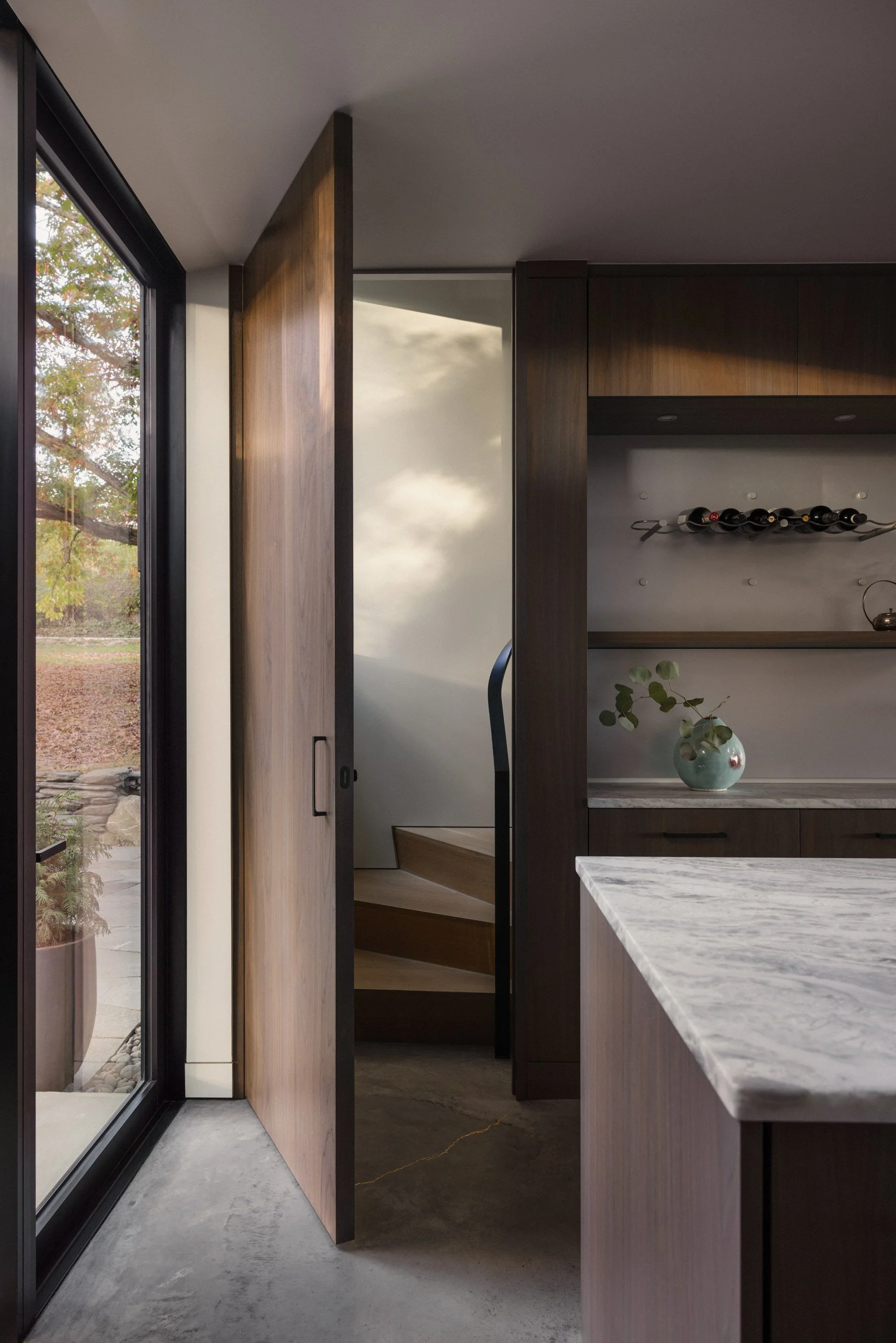
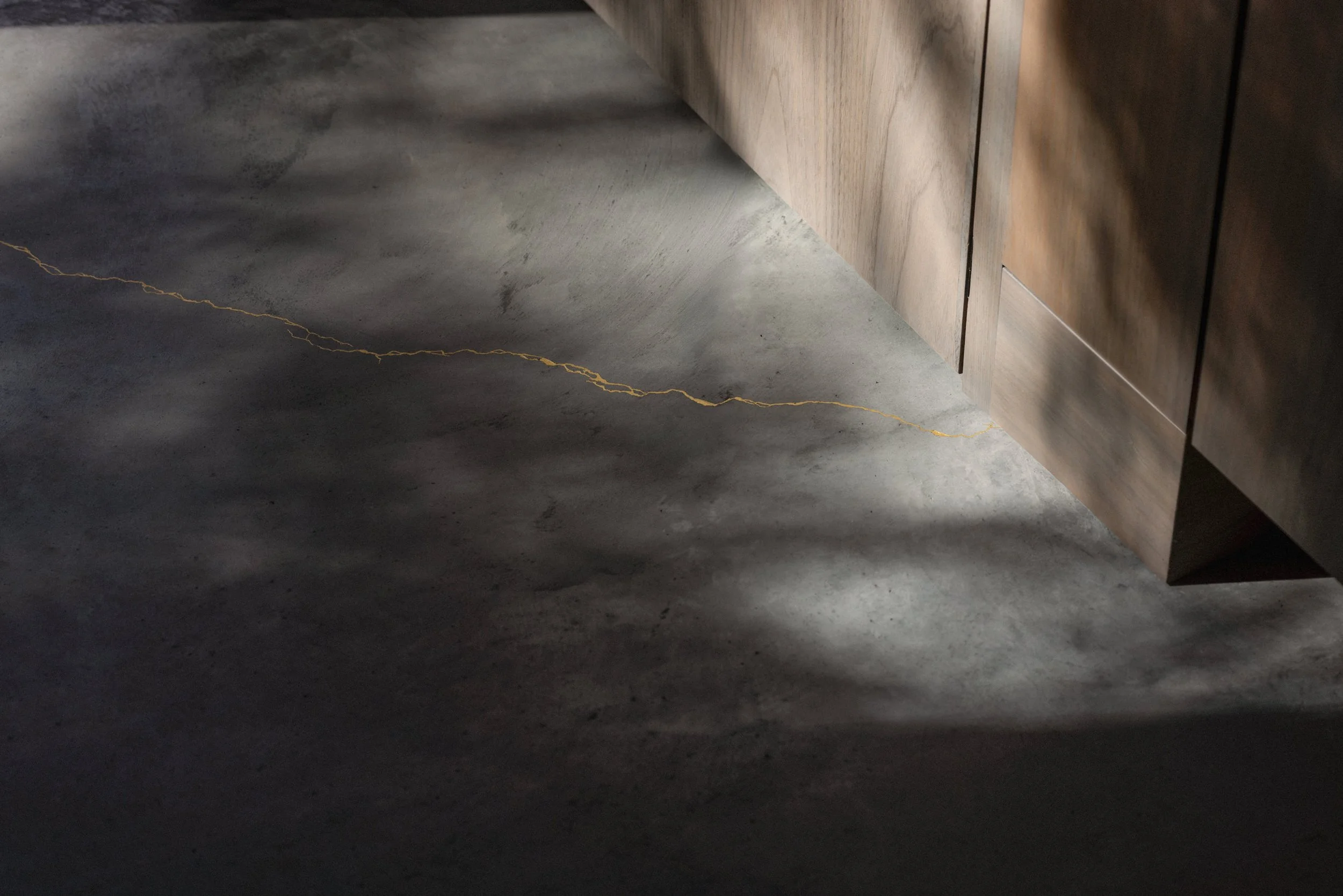
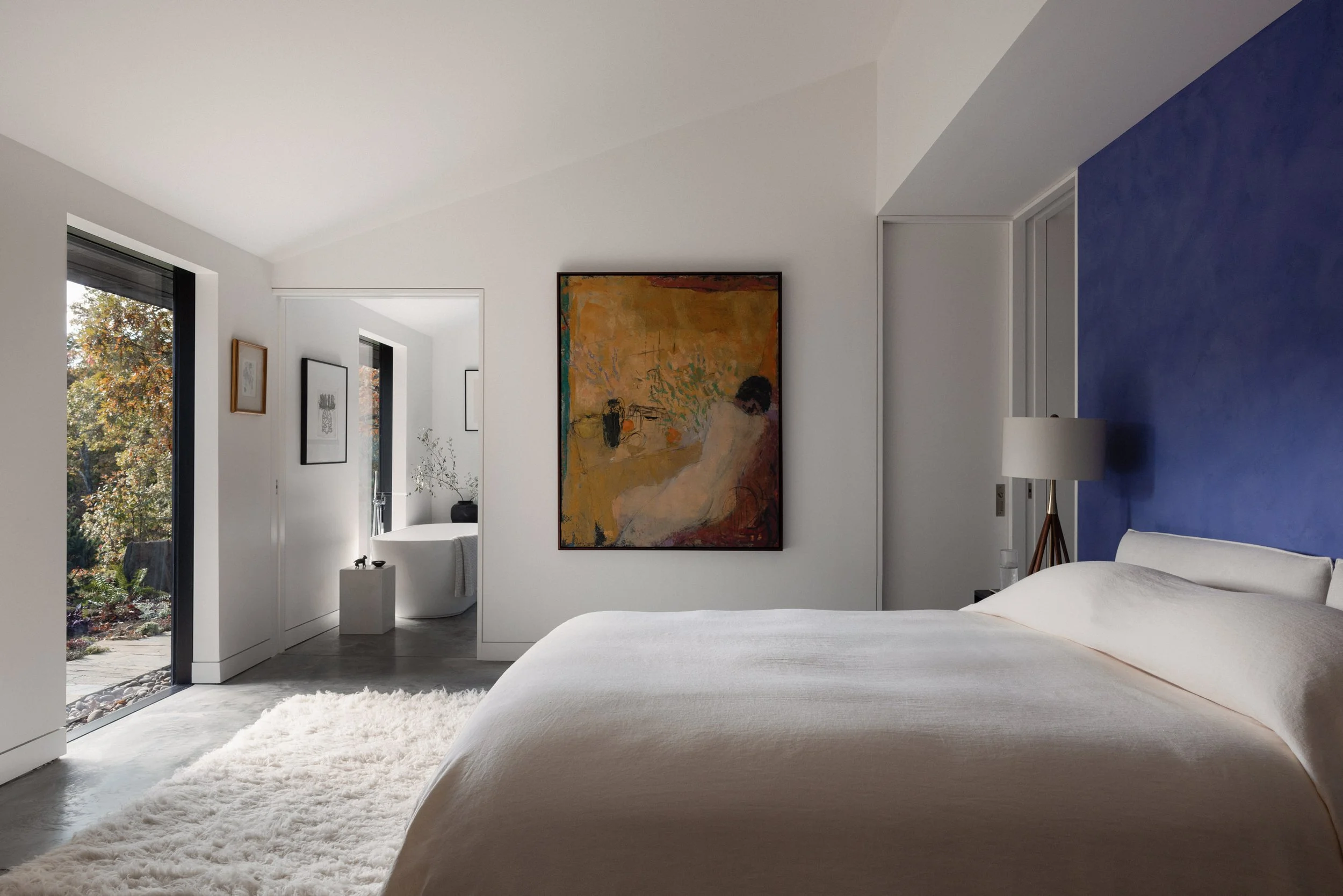
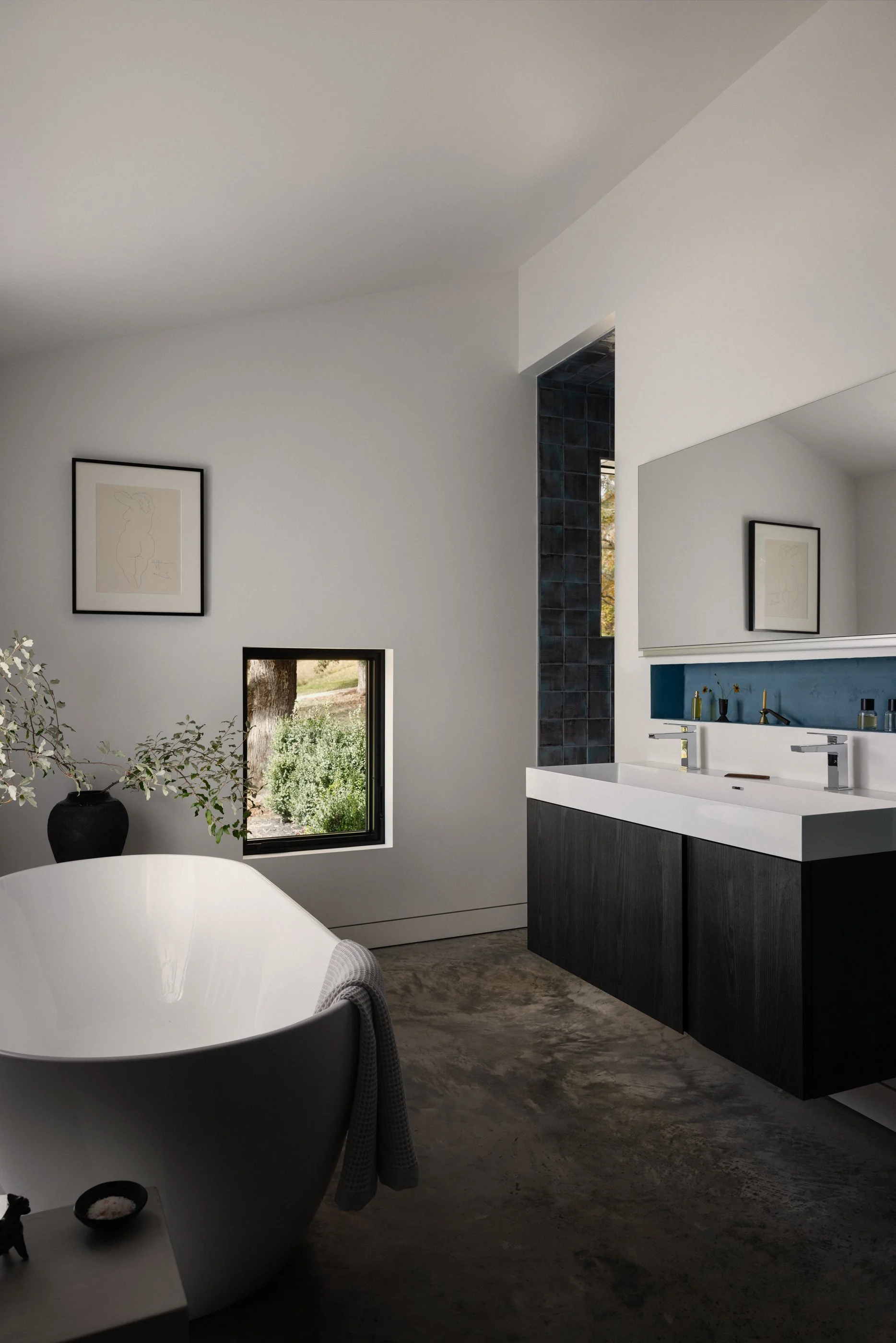
A restrained material palette—charred wood cladding, hand-applied plaster, walnut millwork, and a radiant concrete floor—establishes a tonal calm across the interiors. When cracking occurred in the new concrete slab, the design team chose to highlight the imperfections rather than hide them, repairing the surface with gold epoxy in a nod to the Japanese tradition of kintsugi. The result is a home that doesn’t erase its process of becoming but honors it.
A central design feature is the custom kitchen by Space Theory, which conceals appliances and a discreet stair within its millwork, reinforcing the project’s ethos of functional clarity and spatial economy.
The program is modest—two bedrooms, two and a half baths, and an office—yet the spaces are interconnected and generous in their use of light and proportion.
Outside, the client led the stonework themselves, learning to dry-stack walls using fieldstones found onsite. This hands-on landscape intervention becomes a subtle counterpoint to the house’s refined geometry, grounding the project in both site and personal narrative.
Tiger House exemplifies sustainable design through structural reuse, a high-performance envelope, radiant heating, and passive solar strategies. More broadly, it is an exploration of restraint and craft—a quiet architecture that allows materials, context, and time to speak.